Education is one of the first questions every relocating parent asks, and the good news is reassuring: there are plenty of strong international schools in Mauritius for expat families. From British and IB campuses to French-curriculum lycées, this guide walks you through the systems on offer, what they cost, when to enroll and how to choose the right school by region.
The school systems in Mauritius
Mauritius is bilingual and English-speaking on paper, which makes it unusually easy for international families to settle their children. You will broadly find four routes, and most expats pick one of the first two.
International schools (British and IB)
The largest group of private schools follows the British curriculum (Cambridge IGCSE and A-Levels) or the International Baccalaureate (IB), taught in English with strong French alongside. These are the natural fit if you want a globally portable qualification and an English-medium environment for your children.
French schools
A second well-established network teaches the French national program leading to the baccalauréat. Several schools are linked to the AEFE (the agency for French education abroad), and their pass rates sit close to 100% year after year, which makes them popular with French-speaking families who want full pedagogical continuity.
Public and local private schools
Public schools are free and teach a Mauritian curriculum in English with French as a second language. They are rarely chosen by expat families: the system is highly competitive and can be hard to join mid-way through schooling. A handful of local private schools sit between the public system and the international campuses on price.
Did you know?
Because English is an official language of Mauritius, your child can sit international exams (IGCSE, A-Levels, IB) without leaving the island, and switch back into a UK, French or other system later with minimal friction. That portability is one of the quiet advantages of schooling here.
The main international schools in Mauritius
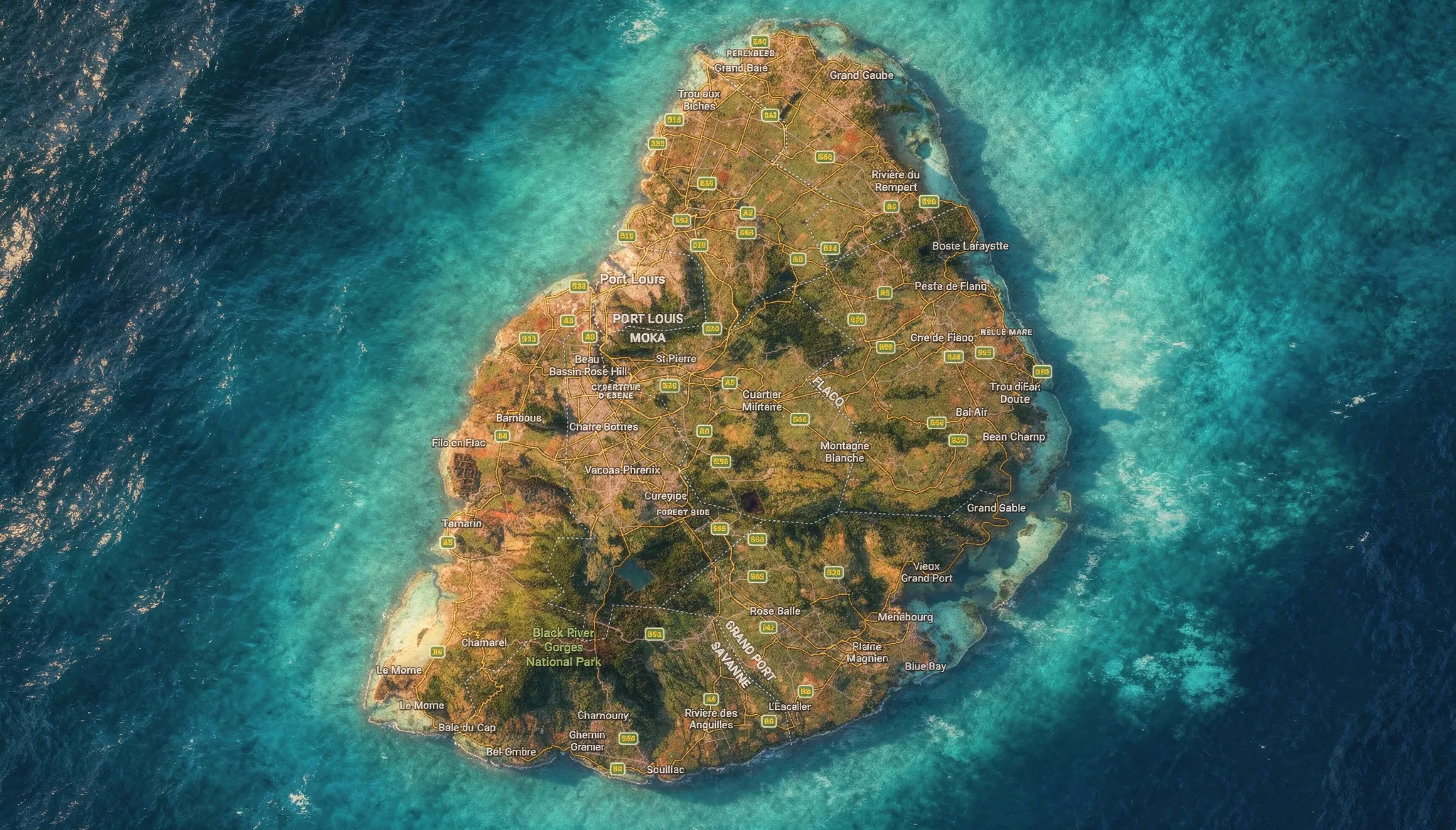
There are around twenty international and private schools, clustered in three areas: the north (Grand Baie and Pamplemousses), the central plateau (Moka, Rose Hill, Quatre Bornes) and, increasingly, the west coast (Tamarin and Flic en Flac). A few names come up again and again:
- Northfields International School (North, Mapou) the island's largest and most established campus, ages 1 to 18, blending British curriculum, Cambridge IGCSE and the full IB continuum
- Le Bocage International School (Centre, Moka) an English-medium IB school for ages 11 to 18, with the IB Diploma and Career-related programmes
- West Coast International School (West, Uniciti near Flic en Flac) the main English-medium option on the west coast, offering Cambridge and the IB Diploma
- Lycée La Bourdonnais (Curepipe) and Lycée des Mascareignes (Moka) French-curriculum schools from nursery through to the baccalauréat
- Smaller bilingual and international primaries spread across the north and west, handy if you want a shorter school run
Names, campuses and programs change, so always confirm the current curriculum and age range directly with each school before you commit.
School fees in Mauritius: what to budget
Fees are the part most parents underestimate. For children of foreign residents, annual tuition usually falls in this range, with one-off enrollment fees and extras on top:
| Item | Typical cost (per year) |
|---|---|
| International tuition (primary) | Rs 125,000 - Rs 300,000 |
| International tuition (secondary) | Rs 300,000 - Rs 530,000 |
| One-off enrollment fee | Rs 20,000 - Rs 75,000 |
| Uniforms, books and supplies | Rs 15,000 - Rs 40,000 |
| School transport (shuttle) | Rs 40,000 - Rs 80,000 |
| After-school activities | Rs 20,000 - Rs 60,000 |
In rough terms, that is around EUR 2,500 to EUR 11,000 per child per year in tuition alone. A family with two children at an English-medium school should plan for roughly Rs 700,000 to Rs 1,200,000 a year once everything is added in. Fees often vary by nationality and by year group, so ask each school for its current schedule.
Good to know
School fees are paid in Mauritian rupees and the figures above are guidance only, not quotes. Currency swings can move your real cost in euros or pounds noticeably from one year to the next, so build a buffer into your relocation budget and request a written fee schedule before you accept a place.
How to choose a school by region
Where you live and where your children study are tightly linked, because traffic on the island can turn a short distance into a long morning. Match your home and your school to the same broad area:
- North (Grand Baie, Pamplemousses) the busiest expat hub, with the widest choice of international schools and a lively community
- Centre (Moka, Curepipe, Quatre Bornes) central and well connected, home to several IB and French schools and a cooler climate
- West (Tamarin, Flic en Flac) a growing family scene with newer campuses, great for an outdoor, beach-side lifestyle
If you are still weighing up neighborhoods, our guide on where to live in Mauritius pairs naturally with the school decision. Many families rent for the first year near a shortlisted school before buying.
Enrollment: timing and documents
Demand is high and the best schools fill quickly, so timing matters as much as paperwork. A few practical pointers:
- Start six to twelve months ahead for popular schools and the youngest year groups, where waiting lists are common
- Apply early in the year for an August or September start, often as early as January or February
- Prepare the school file recent report cards, a leaving certificate, birth certificate and identity documents
- Expect placement tests if your child is moving between the French and English systems
- Have your immigration status ready as schools usually ask for proof of your permit for non-Mauritian students
The permit behind the school place
A point that surprises many parents: enrolling your children almost always depends on your own residence status. Schools generally ask for proof of your immigration status, an occupation or residence permit, a premium visa, or at least an EDB approval in principle, for non-Mauritian students before the year starts.
In practice, your permit covers your dependent children too. Most relocating families come on one of these routes:
- An investor permit if you are setting up or running a company on the island
- A self-employed permit if you freelance or run a one-person business
- A work permit if you are employed by a Mauritian company
- A retirement permit for grandparents joining the family
Lining up the right permit early is the single best thing you can do to keep your enrollment on track, because the school place and the visa file move on the same clock.
Daily school life and the school run
Once your children are in, the rhythm is gentle. School days typically run from around 7:30 am to 2:30 pm, which frees up afternoons for sport, music and the beach. Class sizes at international schools tend to be small, and the mix of nationalities helps newcomers settle within weeks.
Transport is usually a private shuttle or a personal drop-off. After-school activities are plentiful: football, golf, tennis, swimming, sailing, music and drama are all easy to find, either through the school or local clubs.
"Our kids settled in within a month. Small classes, a real mix of nationalities and afternoons free for the beach made the move far easier than we feared. Choosing a school close to home was the best decision we made."
Our tips for choosing a school
- Anticipate enrollment as places are limited in the most sought-after schools
- Visit several campuses ideally during a scouting trip before you move
- Think about the commute and match your home to the same region as the school
- Plan the full budget beyond tuition, factor in uniforms, transport and activities
- Sort your permit first so the school file is not held up by your immigration status
Frequently asked questions
What are the best international schools in Mauritius for expats?
The most established options include Northfields International School in the north (British and IB from age 1 to 18), Le Bocage International School near Moka (IB continuum), West Coast International School at Uniciti near Flic en Flac (Cambridge and IB), and the AEFE-linked French schools such as Lycée La Bourdonnais and Lycée des Mascareignes. The best choice depends on the curriculum you want and where you plan to live.
How much do international schools in Mauritius cost?
For children of foreign residents, annual tuition typically runs from around Rs 125,000 to Rs 530,000 (roughly EUR 2,500 to EUR 11,000) depending on the school and year group. Add one-off enrollment fees of Rs 20,000 to Rs 75,000, plus uniforms, books, transport and activities. Two children at an English-medium school often means Rs 700,000 to Rs 1,200,000 per year in tuition alone.
What curriculum do schools in Mauritius follow?
International schools mostly follow the British curriculum (Cambridge IGCSE and A-Levels) or the International Baccalaureate (IB), usually in English with strong French. French schools follow the French national program leading to the baccalauréat, while public schools teach a Mauritian curriculum in English with French as a second language.
When should I enroll my child in a school in Mauritius?
Start six to twelve months ahead, especially for sought-after schools and the youngest year groups, where waiting lists are common. For a September start, many families apply as early as January or February. Schools often request a copy of your residence or occupation permit before the academic year begins.
Do I need a residence permit to enroll my children in school in Mauritius?
Yes. Schools generally ask for proof of your immigration status for non-Mauritian students, such as an occupation permit, residence permit or premium visa, or at least an EDB approval in principle. Families typically use an investor permit, a self-employed permit or a work permit, which also covers dependent children.
Official sources
Schooling and immigration rules can change, so cross-check the details against the official authorities:
- Ministry of Education (Mauritius) the national education system and registered schools
- Economic Development Board (EDB) the official agency for residence and occupation permits
Planning a family move to Mauritius?
The BlueVisa team helps families relocate to Mauritius, from securing the right permit to settling in. We handle the investor permit, self-employed permit and work permit that cover you and your children, so school enrollment can move forward without a hitch.
Discuss my project