Before you pack your bags for a new country, it helps to know exactly where it sits on the map and what daily life there actually feels like. So let us discover Mauritius together: a small, independent island nation in the Indian Ocean that has quietly become one of the world's most appealing places to settle. This overview covers its location, geography, climate, languages, culture and regions, so you can picture your future home with confidence.
Where is Mauritius?
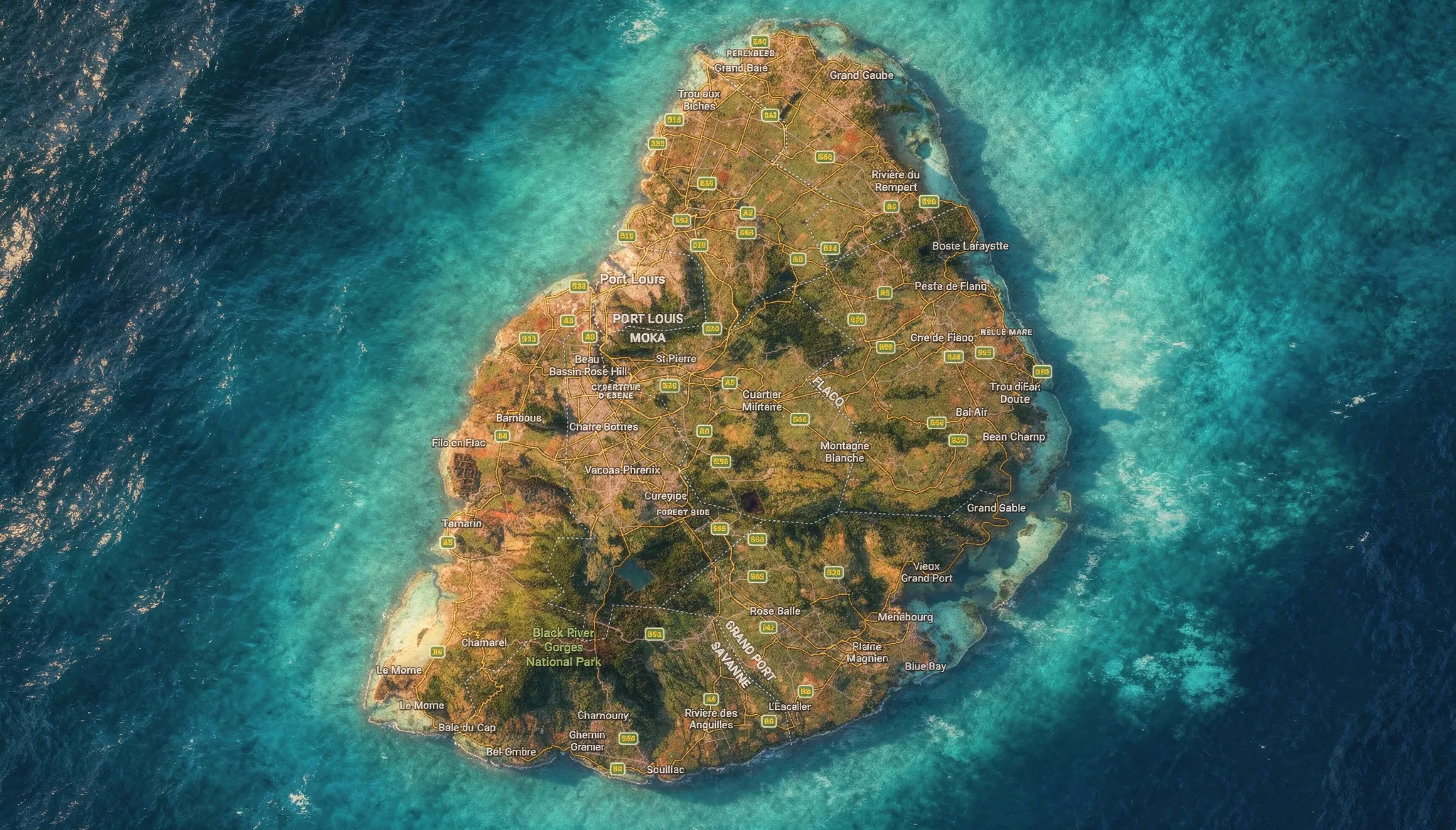
Mauritius is a volcanic island in the southwest Indian Ocean, far enough from everywhere to feel like a true getaway, yet surprisingly well connected. To give you your bearings, the island sits roughly:
- 900 km east of Madagascar
- 2,000 km off the southeast coast of Africa
- 175 km northeast of Reunion Island, its closest neighbor
- just north of the Tropic of Capricorn, deep in the tropics
- part of the Mascarene Islands, alongside Reunion and Rodrigues
This position makes Mauritius a natural regional hub between Africa, Asia and the Gulf, which is one reason its economy punches well above the island's size. Direct flights link it to Europe, the Middle East, Asia and southern Africa, so visiting family or hopping back for work stays manageable.
Time zone
Mauritius runs on UTC+4, which is two to three hours ahead of most of Western Europe and broadly aligned with the Gulf. The gap is small enough to keep working with European colleagues comfortably, with no brutal jet lag when you fly home.
Discover Mauritius: the island's geography
At around 1,865 km², roughly 65 km long by 45 km wide, Mauritius is compact. You can drive from the north coast to the south in about 90 minutes to two hours, which means the beach, the mountains and the city are all within easy reach on the same day.
Mountains, plateaus and forests
The island was born from volcanic activity millions of years ago, and that origin shows in its dramatic, jagged peaks. The interior rises into a cool central plateau ringed by mountains:
- Piton de la Petite Riviere Noire, the highest point at around 828 m
- Iconic silhouettes such as Le Pouce, Pieter Both and Le Morne Brabant
- The lush Black River Gorges National Park, home to native forest and endemic birds
- Waterfalls and the famous Seven Coloured Earths at Chamarel
Lagoons, reefs and coastline
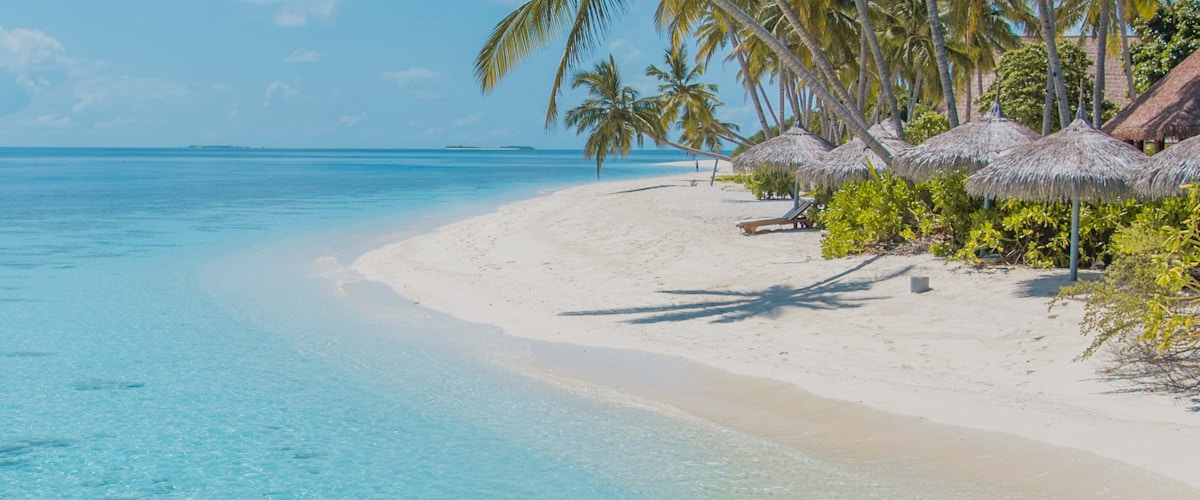
What most people picture when they discover Mauritius is the coast, and rightly so. The island is almost entirely encircled by a coral reef that creates a calm, shallow lagoon shifting from turquoise to deep blue. With around 330 km of coastline and dozens of offshore islets, you are never far from a swim, a snorkel or a sunset paddle.
The Mauritian climate and seasons
Mauritius enjoys a tropical maritime climate, softened by the southeast trade winds. Because it sits in the Southern Hemisphere, the seasons run opposite to Europe and North America, which is part of the appeal: there are two gentle seasons rather than a long, dark winter.
Austral summer (November to April)
- Warm temperatures of around 27-33°C
- Higher humidity, especially in February
- Short, heavy tropical showers that pass quickly
- A cyclone season running roughly January to March
Austral winter (May to October)
- Mild, dry, sunny days of around 17-25°C
- Cooler evenings up on the central plateau
- Lower humidity and clear skies
- Sea still warm enough to swim, at roughly 22-24°C
Did you know?
Mauritius has microclimates. The north and west are the driest and sunniest, which is why most expats settle there, while the cooler central plateau around Curepipe and Moka sees more cloud and rain. The east is breezier, beloved by kitesurfers, and the south stays wild and green. You can effectively choose your weather by choosing your region.
An independent island nation
One common surprise: Mauritius is not a French or British territory. It is a fully independent country, having gained independence in 1968 after periods of Dutch, French and British rule. Today it is a stable parliamentary republic within the Commonwealth, with its own government, the Mauritian rupee as currency, and a hybrid legal system that blends French civil law with British common law.
That long record of political stability, peaceful elections and business-friendly governance is exactly what reassures people moving their savings and families across the world. Reunion Island, just next door, is the French overseas region people often confuse it with.
People, languages and culture
Around 1.26 million people live in Mauritius, and the island is a genuine cultural mosaic. Over centuries it brought together communities of Indian, African, European and Chinese heritage, creating a society that lives side by side and celebrates everyone's festivals, from Diwali and Eid to Chinese New Year and Christmas.
For newcomers, the best news is that everyday communication is easy. Three languages weave through daily life:
- English, the de facto official language used in government, schools and the courts
- French, widely spoken in business, the media and social life
- Mauritian Creole, the warm everyday lingua franca you will hear in the street
In practice, if you speak English or French you will get by from day one, a real advantage over many other tropical destinations. That ease with English also makes the island a natural fit for families, as you will see in our guide to schools in Mauritius.
The regions of Mauritius
For such a small island, Mauritius offers strikingly different lifestyles depending on where you settle. Here is a quick orientation to the four coasts:
| Region | Best for |
|---|---|
| North (Grand Baie) | Lively expat hub, nightlife, shops and services |
| West (Tamarin, Flic en Flac) | Sunsets, families, outdoor sports, calmer pace |
| East (Belle Mare) | Quiet, breezy coast and unspoiled lagoons |
| South | Wild nature, dramatic coastline, local life |
Each coast has its own character, so it pays to visit before you commit. For a deeper, neighborhood-by-neighborhood breakdown, see our companion guide on where to live in Mauritius.
Good to know
Falling for the island on holiday is one thing; settling there long term is another. To live in Mauritius beyond a tourist stay, you will need a residence permit suited to your situation, whether you invest, retire, work or run a business. Choosing the right route early makes the whole move far smoother.
From discovering Mauritius to living there
Once the island has won you over, the practical question becomes how to stay. Mauritius offers several long-term residence routes, and the right one depends entirely on your profile:
- Retirees aged 50 and over with passive income often choose the retirement permit
- Investors and company owners typically use the investor permit
- Freelancers and consultants lean toward the self-employed permit, and salaried staff toward the work permit
Whichever path fits, the discovery you started today can become a real, settled life on the island sooner than you might think.
Frequently asked questions
Where is Mauritius located?
Mauritius is a volcanic island in the southwest Indian Ocean, roughly 900 km east of Madagascar and around 2,000 km off the southeast coast of Africa. It lies just north of the Tropic of Capricorn and forms part of the Mascarene Islands, alongside Reunion and Rodrigues. Direct flights connect it to Europe, the Middle East, Asia and Africa.
What language do they speak in Mauritius?
English is the de facto official language, used in government, schools and the courts, while French is widely spoken in business and the media. Mauritian Creole is the everyday lingua franca, and many residents also speak Asian languages such as Bhojpuri or Hindi. For English- and French-speaking newcomers, the language barrier is minimal.
Is Mauritius a country or part of France?
Mauritius is a fully independent country, not a French or British territory. It gained independence in 1968 and is a stable parliamentary republic within the Commonwealth, with its own government, currency (the Mauritian rupee) and legal system blending French and British traditions. Nearby Reunion Island, by contrast, is a French overseas region.
What is the climate like in Mauritius?
Mauritius has a tropical maritime climate with two seasons. The austral summer (November to April) is warm and humid at around 27-33°C with occasional tropical showers, while the austral winter (May to October) is dry and sunny at around 17-25°C. The sea stays warm enough for swimming all year, and the climate varies by region.
How big is Mauritius and how long does it take to drive across?
Mauritius covers about 1,865 km², measuring roughly 65 km long by 45 km wide. You can drive from the north to the south coast in around 1.5 to 2 hours, depending on traffic. Despite its small size, the island packs in beaches, mountains, forests and distinct regions, each with its own character.
Ready to turn discovery into a move?
The BlueVisa team guides newcomers through every step of settling in Mauritius, from choosing the right route to handling the paperwork. Whether you picture the retirement permit or the investor permit, we help you make the island your home.
Discuss my project