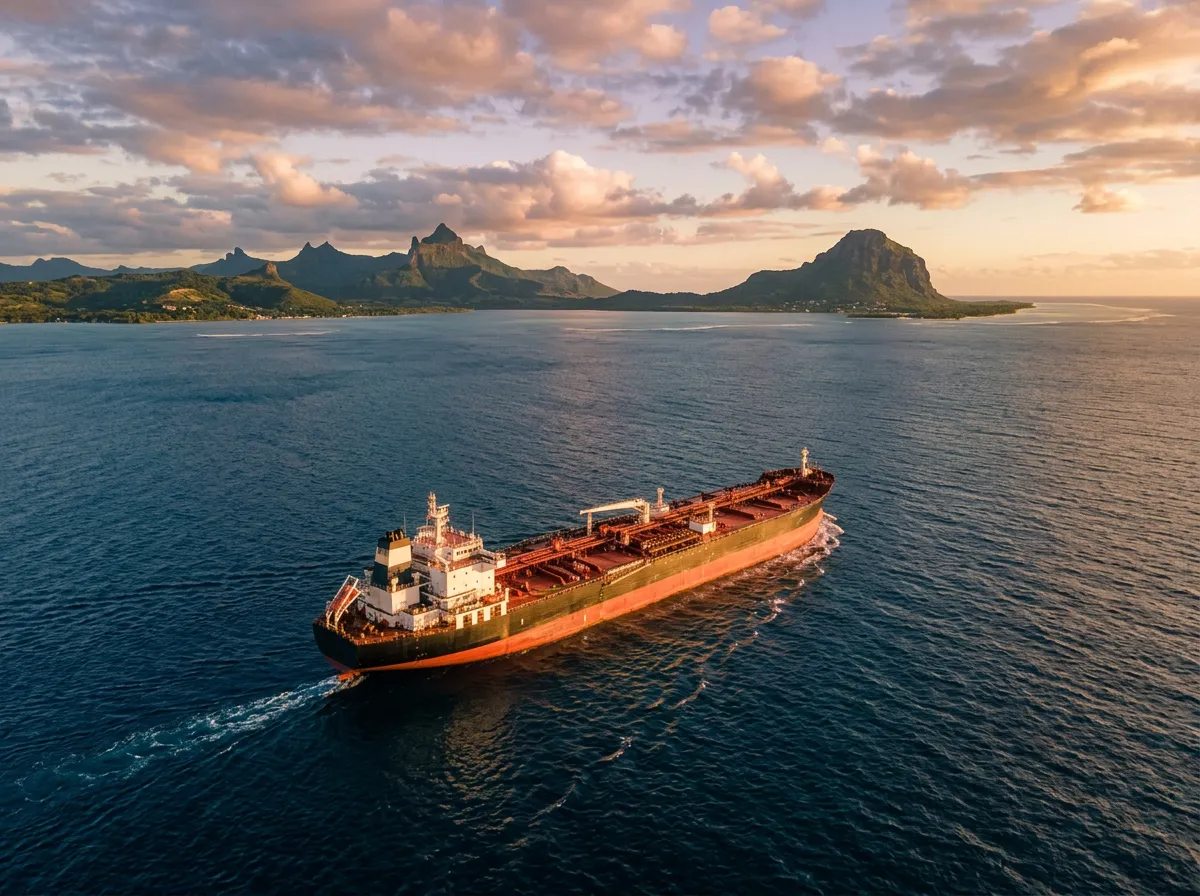
Mauritius is a small, open economy that depends heavily on international trade, with roughly USD 6.65 billion of imports in 2024. Food, fuel and equipment all arrive by sea. So as the Strait of Hormuz crisis escalates, what is the real impact for the island and its residents? This analysis cuts through the headlines, sector by sector, with a simple conclusion up front: the risk is higher prices, not empty shelves.
The situation: a chokepoint under pressure
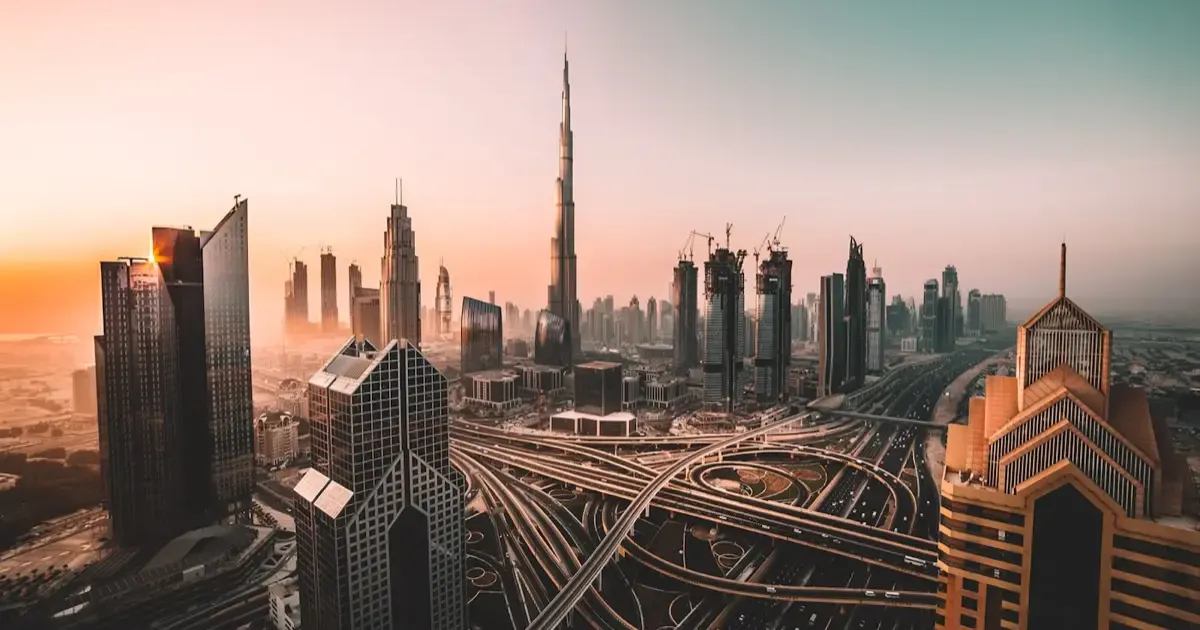
The Strait of Hormuz, through which around 20% of the world's oil passes, has effectively seized up. Daily traffic has collapsed from about 138 vessels a day to a handful, and tankers have stopped transiting. Dozens of ships are anchored nearby, some have been attacked, and insurers have pulled war-risk cover, which freezes commercial traffic in practice. The International Energy Agency describes the strait as the world's single most important oil transit chokepoint.
Good to know: crude prices during the crisis
- WTI: USD 102 - 109 (up roughly 20% in a week)
- Brent: USD 106 - 109
- Murban (UAE): USD 121
- S&P 500 and Nasdaq sliding (around -1.6%)
Kuwait has halted production, Iraq has cut output by about 70%, and Qatar has warned that crude could reach USD 150. This is a worldwide shock to energy markets, not a Mauritius-specific event, which is the most important context to keep in mind throughout.
Oil: direct exposure, but no shortage in sight
In 2024, Mauritius imported roughly USD 1.4 billion of petroleum products. Because the island has no oil, gas or coal of its own, around 82% of its primary energy is imported. Here is how its fuel suppliers break down:
| Supplier | Value | Share | Route |
|---|---|---|---|
| UAE + Saudi Arabia | ~USD 770M | 54% | Exposed (Hormuz) |
| India | USD 202M | 14% | Clear |
| South Africa | USD 155M | 11% | Clear |
| Brazil, Spain, others | ~USD 310M | 21% | Clear |
In plain terms: about half of the oil Mauritius imports travels on a route now under threat. The other half moves on shipping lanes that are entirely clear of the Gulf.
1. India: the immediate Plan B, and a strong one
India already supplies USD 202 million of refined fuel to Mauritius. Its refineries, including Jamnagar (the largest in the world, at 1.4 million barrels a day), sit on India's west coast and have no dependence on the Strait of Hormuz. The State Trading Corporation (STC), Mauritius's sole authorized importer of petroleum products, already runs a multi-year contract with an Indian refiner only about eight days' sailing away.
The India-to-Mauritius sea route (7 to 10 days) crosses the open Indian Ocean, far from the conflict zone. The capacity is there, the route is safe, and Indian Oil already operates on Mauritian soil, so redirecting purchases toward Indian refineries is a realistic lever rather than a theoretical one.
2. Coal for electricity: minimal risk
Roughly 30% of Mauritius's primary energy comes from South African coal (Richards Bay) and about 10% from local renewables. That means a meaningful slice of the country's electricity is generated without oil and entirely outside the threat zone. Coal arrives directly from Richards Bay on a 5-to-8-day voyage.
3. Buffer stocks exist
Mauritius holds an estimated two to four weeks of fuel reserves in the tank farms of Port Louis. Even in a scenario where suppliers have to be switched, there is no risk of an abrupt cut-off, only the need to manage a transition.
4. A fully closed Hormuz: unsustainable worldwide
A fifth of the world's oil moves through this strait, so a prolonged closure is a shock to the entire planet, not to Mauritius specifically. The international pressure to reopen a shipping corridor would be enormous. Even during the Iran-Iraq War (1980-1988), Hormuz was never closed for long.
Did you know? The oil takeaway
Around half of Mauritius's oil travels on an exposed route. But India can absorb the demand on a clear lane with massive refining capacity, and two-to-four-week buffer stocks give the island time to manage a switch if needed. Shortage is unlikely; price pressure is the real story.
Food: no supplier transits Hormuz
Mauritius has an overall food self-sufficiency ratio of only about 25%: it imports three-quarters of what it eats, worth roughly USD 1.1 billion in 2024. But the categories are not equal, and where the food comes from matters more than the headline number.
What Mauritius grows locally
- Fresh vegetables: close to 100% self-sufficient. Imports are limited to onions, potatoes and garlic. For everyday vegetables (tomatoes, squash, beans, salads) the island feeds itself
- Tropical fruit: close to 100% self-sufficient. The USD 51M of imports covers temperate fruit (apples, grapes, oranges), while mangoes, lychees, bananas and pineapples are grown locally
- Poultry: about 99% self-sufficient. Mauritius produces almost all of its own chicken, though roughly 90% of the animal feed (corn, soy) is imported from Argentina on a clear route
What Mauritius has to import
| Category | Value | Main suppliers |
|---|---|---|
| Fish & seafood | USD 234M | Spain (21%), France (12%), India (7%) |
| Cereals (rice, wheat, corn) | USD 147M | India (35%), France (27%), Argentina (17%) |
| Dairy | USD 133M | New Zealand (41%), France (15%), Australia (10%) |
| Meat | USD 70M | Australia (47%), India (20%), New Zealand (11%) |
| Oils & fats | USD 67M | Argentina (24%), Spain (12%), Australia (8%) |
| Fruit (temperate) | USD 51M | South Africa (51%) |
Did you know? The key finding
Not one of Mauritius's main food suppliers ships through the Strait of Hormuz. India, South Africa, Australia, New Zealand, France, Spain, Argentina and Brazil all reach the island via the Indian Ocean, the Atlantic or the Suez Canal, outside the conflict zone.
Mauritius's food shipping routes
- India: direct across the Indian Ocean, 7 to 10 days at sea
- South Africa: direct route, 5 to 8 days (the shortest)
- Australia: direct across the Indian Ocean, 8 to 12 days
- New Zealand: South Pacific then Indian Ocean, 12 to 18 days
- France / Spain: via Suez or the Cape of Good Hope, 20 to 35 days
- Argentina / Brazil: South Atlantic then the Cape then the Indian Ocean, 25 to 35 days
The real impact: prices, not availability
The risk for Mauritius is not scarcity but inflation. UN Trade and Development (UNCTAD) has flagged exactly this pattern for import-dependent economies: higher energy, freight and insurance costs feed through into the shelf price. Here are the mechanisms at work:
- Shipping costs: oil above USD 100 pushes freight rates up. Fuel is 40 to 60% of the cost of a cargo voyage
- Marine insurance: premiums rise globally during conflict, even on routes that are not directly affected
- Knock-on effect on food: if the conflict drags on, world food prices climb because energy drags the whole cost base upward
For residents and expats in Mauritius, this means a likely rise in the cost of living in the short term, mostly on fuel and imported goods. But no shortage is on the cards. If you are weighing a move, our guide on why people move to Mauritius looks at the fundamentals that a price wobble does not change.
"Mauritius will see prices rise like the rest of the world. But unlike many small islands, its food suppliers sit 100% outside the conflict zone, and credible alternatives exist for oil."
The bottom line, sector by sector
| Sector | Situation | Risk |
|---|---|---|
| Oil | ~50% Gulf (exposed), India = Plan B | Moderate |
| Electricity | 40% coal + renewables, oil-free | Low |
| Fish | Spain, France, India: clear of Hormuz | Low |
| Cereals | India (35%), France, Argentina: clear | Low |
| Dairy | New Zealand (41%), France, Australia | Low |
| Meat | Australia (47%), India (20%), NZ | Low |
| Vegetables | Mostly local production + India | Very low |
| Fruit | South Africa (51%), the shortest route | Very low |
Frequently asked questions
Does the Strait of Hormuz crisis put Mauritius at risk of an oil shortage?
No. Around half of the oil Mauritius imports travels on routes that do not touch the Strait of Hormuz (India, South Africa, Brazil). India has huge refining capacity and a direct 7-to-10-day sea route across the open Indian Ocean, and Mauritius also holds an estimated two to four weeks of fuel reserves in Port Louis.
Is the food supply in Mauritius threatened by a Hormuz closure?
No. Effectively none of Mauritius's main food suppliers (India, Australia, New Zealand, France, South Africa, Argentina) ship through the Strait of Hormuz. Their routes cross the Indian Ocean, the Atlantic or the Suez Canal, well outside the conflict zone, and most fresh vegetables and tropical fruit are grown locally.
How would the Hormuz crisis affect the cost of living in Mauritius?
The main impact is higher prices, not empty shelves. Oil above 100 dollars a barrel raises shipping costs (fuel is 40 to 60 percent of a cargo voyage) and marine insurance premiums. Energy and imported-goods prices are likely to rise in Mauritius, just as they do everywhere else in the world.
How does Mauritius generate its electricity?
Roughly 30 percent of primary energy comes from South African coal and about 10 percent from local renewables. That share of the power mix depends neither on oil nor on the Strait of Hormuz. Coal arrives directly from Richards Bay in South Africa, a 5-to-8-day voyage well clear of the Gulf.
Is it still a good time to move to Mauritius?
The Hormuz crisis is a global event that affects every country. Mauritius remains well positioned thanks to a diverse supplier base, its proximity to India and South Africa, and local production that covers most fruit, vegetables and poultry. The lifestyle, the tax framework and the safety of the island are unchanged.
Sources
Geopolitics and energy markets move fast, so these figures are best cross-checked against the primary sources:
- International Energy Agency (IEA) the Strait of Hormuz as a global oil transit chokepoint
- UN Trade and Development (UNCTAD) Hormuz disruption, freight and insurance pass-through, and import-dependent economies
Additional data: UN COMTRADE 2024 via Trading Economics, State Trading Corporation (Mauritius), Statistics Mauritius monthly imports, and contemporaneous market quotes (March 2026).
Thinking about a move to Mauritius?
Geopolitical noise aside, Mauritius remains a stable, safe place to settle. The BlueVisa team guides you through every step, from the investor permit and the self-employed permit to the retirement permit, plus the move itself and the day-to-day admin.
Discuss my project